
Indonesia is widely recognized as one of the world’s major tea-producing countries. Its teas are enjoyed locally and exported globally, ranging from traditional black teas to premium white teas and specialty tea selections.
Yet Indonesian tea did not become an important tea origin overnight.
The story of Indonesian tea spans more than three centuries. It is a story of exploration, agricultural innovation, historic tea estates, and generations of expertise that continue to shape Indonesian tea today.
Understanding this history helps explain why Indonesian tea remains a respected origin in global tea markets and why its heritage continues to influence modern tea production.
The First Tea Plants Arrive in Indonesia
The earliest recorded introduction of tea to Indonesia dates back to 1684 during the Dutch colonial period.
Historical records indicate that Andreas Cleyer, a German physician and botanist associated with the Dutch East India Company (VOC), introduced tea plants to Batavia, now known as Jakarta.
The exact origin of these early tea plants remains a subject of historical discussion. Some records suggest the seeds came from Japan, while others associate them with Chinese tea varieties already circulating through Asian trade networks.
Regardless of their precise origin, these early introductions proved that tea could grow successfully in the Indonesian archipelago.
At this stage, tea was cultivated primarily for botanical study rather than commercial production.
Why Tea Was Introduced to Indonesia
By the eighteenth and nineteenth centuries, tea had become one of Europe’s most valuable commodities.
Demand was growing rapidly, while European trading powers remained heavily dependent on imported Chinese tea.
The Dutch recognized that Indonesia possessed several natural advantages for tea cultivation:
- Fertile volcanic soils
- Cool mountain climates
- Consistent tropical rainfall
- Favorable temperatures
- Extensive agricultural land
These conditions made parts of Java particularly suitable for tea cultivation.
Rather than relying entirely on imported tea, the Dutch began exploring the possibility of producing tea within the Dutch East Indies.
The Birth of Commercial Tea Cultivation
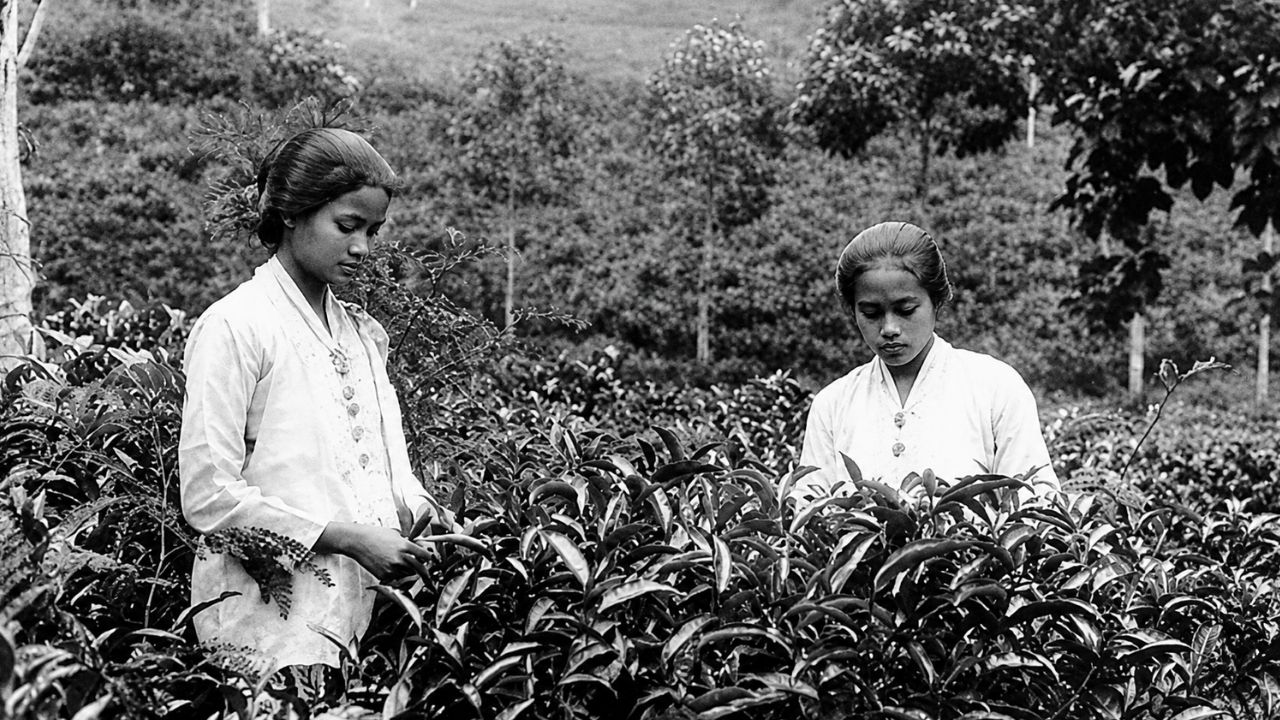
Commercial tea cultivation began to take shape during the early nineteenth century.
By the 1820s, successful tea planting programs had been established in Java. Large-scale cultivation accelerated after 1828 under the Cultivation System introduced by Governor-General Johannes van den Bosch.
The earliest commercial plantations primarily used Chinese tea varieties (Camellia sinensis var. sinensis), which were well suited to cooler highland environments.
These early plantations laid the foundation for Indonesia’s future tea industry and demonstrated that tea could become a commercially viable crop.
The Arrival of Assam Tea
A major turning point came in 1877.
Tea producers began introducing Assam tea varieties (Camellia sinensis var. assamica) from Ceylon, present-day Sri Lanka.
Compared with traditional Chinese tea plants, Assam varieties offered several advantages:
- Higher yields
- Stronger growth in tropical climates
- Greater commercial productivity
- Better suitability for large-scale cultivation
Many tea estates gradually adopted Assam varieties, helping Indonesian tea production expand significantly.
The introduction of Assam tea would go on to influence the character of Indonesian tea production for generations.
The Rise of Historic Tea Estates
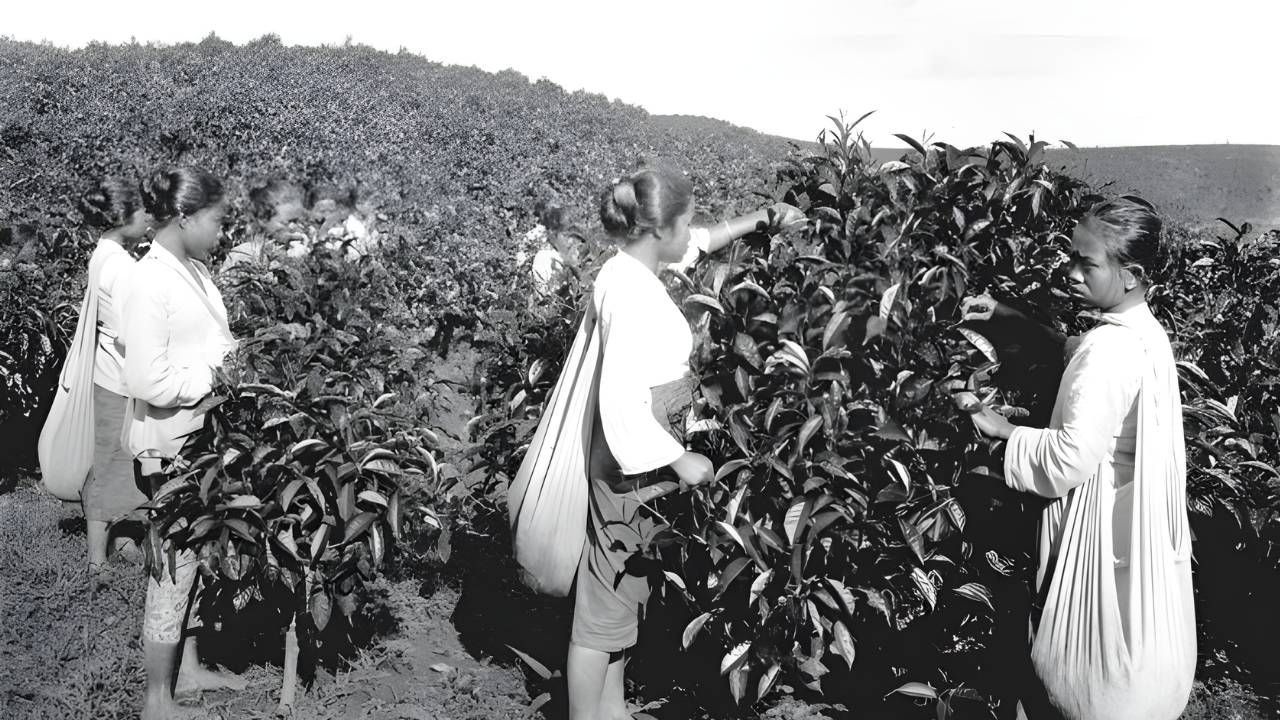
As tea cultivation expanded, large tea estates emerged across West Java and other highland regions.
These estates became the backbone of Indonesia’s tea industry.
Over generations, they developed expertise in:
- Tea cultivation
- Harvest management
- Processing techniques
- Quality control
- Estate management
Many of the practices that define Indonesian tea today were refined and perfected within these estates.
The connection between tea origin, estate management, and quality remains one of the defining characteristics of Indonesian tea.
The Story of Ciwidey
Among Indonesia’s historic tea-growing regions, Ciwidey occupies a special place in the history of Indonesian tea.
Located in the highlands of West Java, Ciwidey offers ideal tea-growing conditions, including cool temperatures, fertile volcanic soils, abundant rainfall, and high elevations.
In 1873, the Kerkhoven family established tea plantations in the region as part of the rapid expansion of tea cultivation across southern West Java.
One of the key figures behind this development was Rudolf Eduard Kerkhoven, who played an important role in transforming Ciwidey into a significant tea-producing region.
The success of tea cultivation in Ciwidey helped strengthen West Java’s reputation as one of Indonesia’s most important tea-growing areas.
Today, part of this legacy continues through LUANGKAN Tea. One of the historic tea estates established during the Kerkhoven era in Ciwidey is now owned and operated by LUANGKAN, preserving a direct connection to a chapter of Indonesian tea history that began more than 150 years ago.
Alongside its tea estates across West Java, LUANGKAN continues this tradition of tea cultivation while combining generations of tea-growing expertise with modern standards of quality and consistency.
Indonesia Becomes a Global Tea Producer
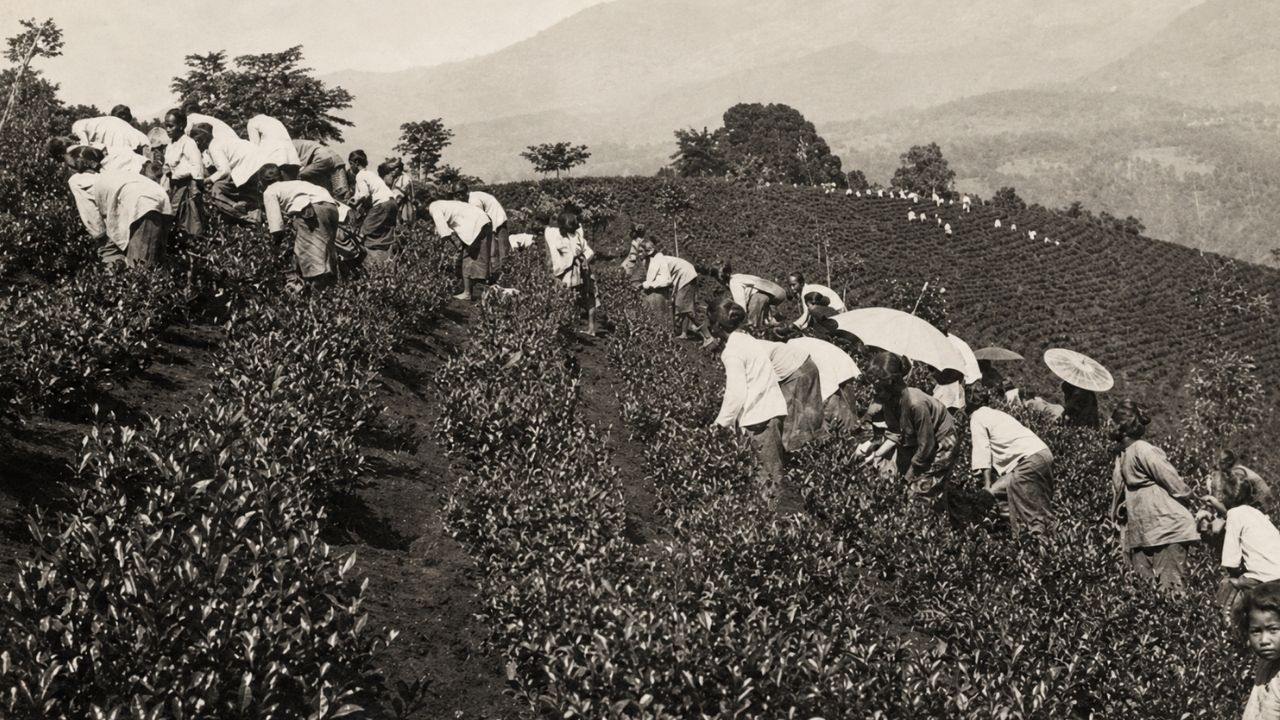
By the late nineteenth and early twentieth centuries, Indonesia had established itself as a major tea-producing nation.
Tea from Indonesia was exported extensively to international markets, particularly Europe.
The country’s favorable growing conditions, experienced estate management, and expanding production capacity helped strengthen its reputation among global buyers.
During this period, Indonesia became one of the world’s leading tea-exporting regions and established itself as an important player in the international tea trade.
From Colonial Industry to Modern Tea Origin
Following Indonesia’s independence, the tea industry entered a new phase of development.
Ownership structures changed, production systems evolved, and the industry adapted to changing global market conditions.
While competition increased and consumer preferences shifted, Indonesian tea producers continued refining cultivation practices, processing methods, and quality standards.
Over time, Indonesia expanded beyond traditional tea categories and developed expertise in premium and specialty teas, including White Tea, Green Tea, Black Tea, Oolong Tea, Jasmine Tea, and specialty tea selections.
Why Indonesia’s Tea History Still Matters
Tea heritage is more than a historical timeline.
It represents centuries of accumulated knowledge, experience, and craftsmanship.
Every generation of growers, tea makers, and estate managers contributed to the development of Indonesian tea as we know it today.
The expertise built over more than three centuries continues to influence cultivation methods, quality standards, and tea production throughout the country.
For tea buyers, tea professionals, and tea lovers, understanding the history of Indonesian tea provides valuable insight into why Indonesia remains one of the world’s most respected tea-producing origins.
About LUANGKAN Tea
LUANGKAN Tea was born from Indonesia’s rich tea heritage and a simple belief: great tea begins at origin.
With tea estates and production facilities across Indonesia, including historic tea estates in West Java, LUANGKAN delivers premium Indonesian tea with uncompromising standards of quality, consistency, and authenticity.
By combining generations of tea expertise with modern production standards, LUANGKAN proudly continues the story of Indonesian tea for customers and partners around the world.