
Most tea drinkers evaluate tea based on a simple question:
“Do I enjoy it?”
Tea professionals evaluate tea differently.
Importers, tea buyers, distributors, and quality control teams must assess tea objectively and consistently across multiple samples, harvests, and production batches.
Their goal is not simply to find a tea they personally enjoy.
Their goal is to determine whether a tea meets specific quality standards and whether it can deliver a consistent experience over time.
This is why professional tea tasting follows a structured process rather than personal preference alone.
What Makes Professional Tea Tasting Different?
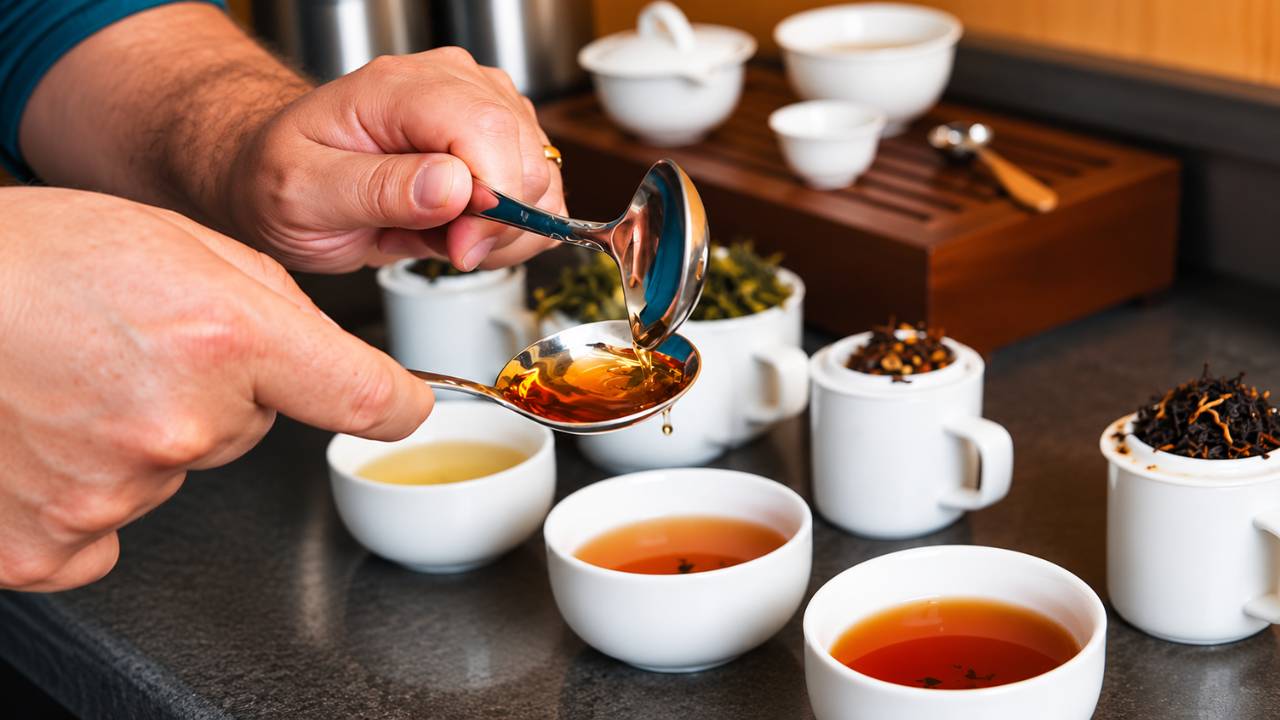
One of the biggest differences between consumers and professionals is that professionals rarely evaluate a tea in isolation.
Instead, teas are often assessed side-by-side.
Multiple samples may be compared at the same time to identify differences in:
- Quality
- Aroma
- Flavor
- Consistency
- Overall value
This comparative approach allows buyers to make more objective decisions and helps reduce the influence of personal preference.
The question is not simply whether a tea tastes good.
The question is how it performs compared to other teas.
Step 1: Evaluating the Dry Leaf
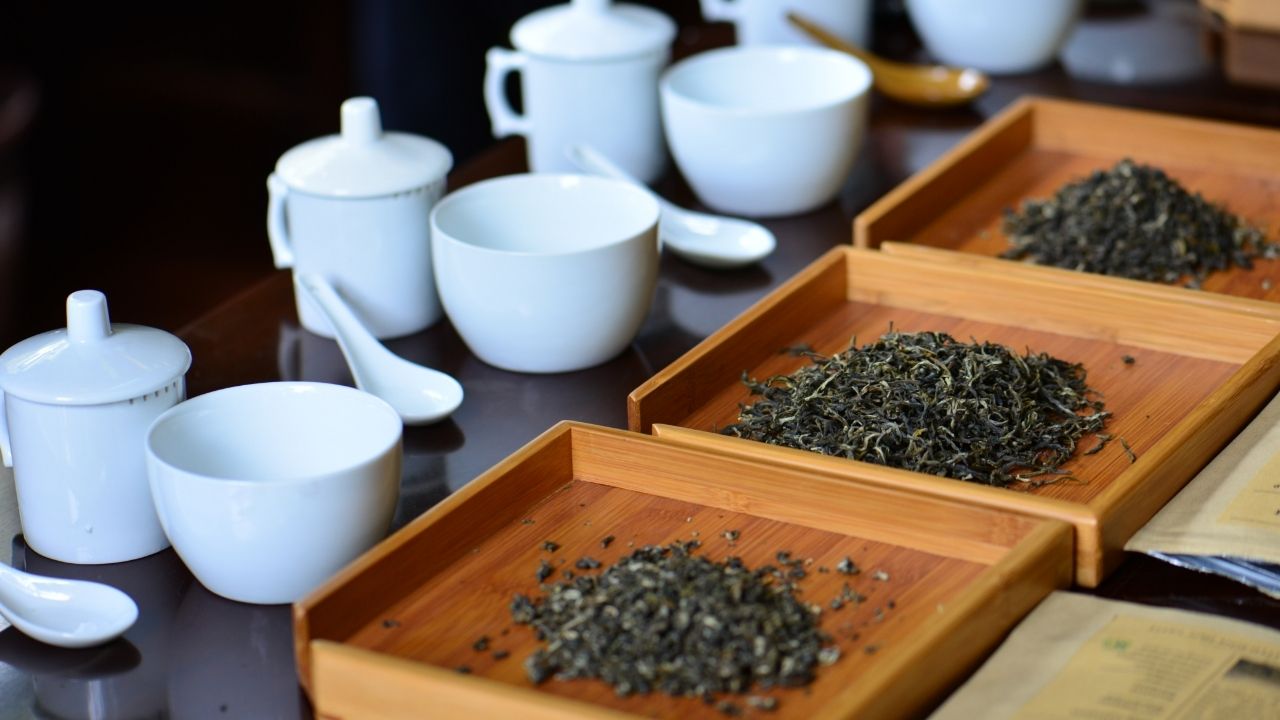
Before brewing begins, professionals examine the dry leaf.
The appearance of the leaf can reveal valuable information about harvesting standards and production quality.
Tea tasters often evaluate:
- Uniformity
- Leaf size
- Presence of buds
- Color consistency
- Degree of breakage
The dry leaf provides the first clues about how carefully a tea was produced.
Step 2: Assessing Aroma
Aroma is one of the most important indicators of tea quality.
Professionals assess both the fragrance of the dry leaf and the aroma of the infused leaf after brewing.
They evaluate:
- Freshness
- Intensity
- Complexity
- Clarity
- Distinctiveness
A premium tea often displays a clean and expressive aromatic profile that reflects both its origin and processing.
Step 3: Examining the Liquor
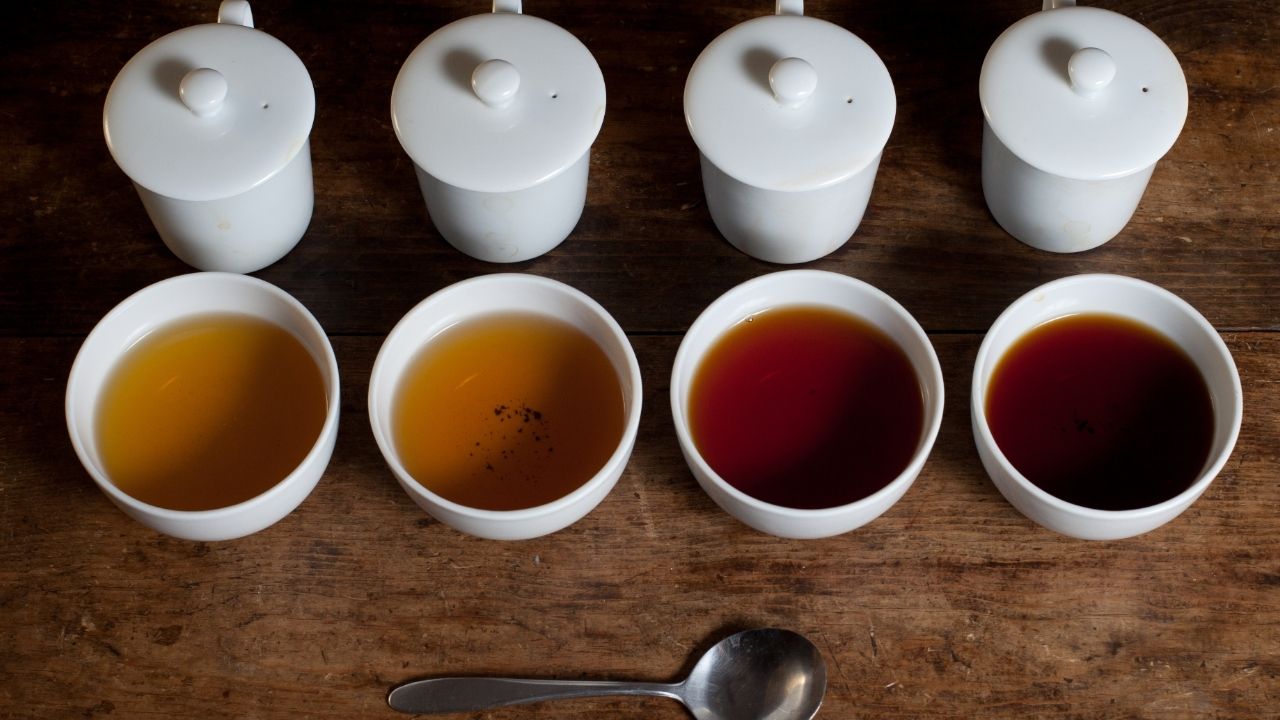
After brewing, the tea liquor itself is evaluated.
Tea professionals typically examine:
- Color
- Brightness
- Clarity
- Visual appeal
A clean and vibrant liquor often indicates careful processing and good leaf quality.
The liquor provides additional insight before tasting begins.
Step 4: Evaluating Flavor and Balance
Flavor remains central to tea evaluation.
However, professionals look beyond simple enjoyment.
They assess:
- Balance
- Complexity
- Sweetness
- Depth
- Clarity of flavor
The highest-quality teas often display harmony between multiple characteristics rather than relying on a single dominant note.
Balance is frequently one of the clearest indicators of quality.
Step 5: Assessing Mouthfeel and Finish
Tea quality is not experienced through flavor alone.
Texture and aftertaste also play important roles.
Professionals evaluate:
- Body
- Smoothness
- Structure
- Length of finish
Exceptional teas often leave a clean, memorable impression that continues beyond the final sip.
Why Consistency Matters More Than a Great Cup
A tea that tastes excellent once is impressive.
A tea that performs consistently across multiple harvests and production batches is valuable.
For importers, distributors, hospitality groups, and tea brands, consistency is often just as important as flavor.
A buyer must have confidence that today’s tea will resemble the tea delivered months from now.
This is one reason consistency remains one of the most important factors in professional tea evaluation.
How LUANGKAN Maintains Quality Standards
At LUANGKAN Tea, quality evaluation is integrated throughout the production process.
As an owner and operator of tea estates, factories, and processing facilities across West Java, LUANGKAN maintains direct oversight from cultivation through final production.
Tea quality is evaluated using multiple criteria, including leaf appearance, aroma, liquor quality, flavor profile, and consistency.
This structured approach helps ensure that every tea meets the standards expected by both domestic and international customers.
Final Thoughts
Professional tea tasting is far more than simply drinking tea.
It is a systematic process designed to compare, evaluate, and understand tea quality across multiple dimensions.
By assessing appearance, aroma, liquor, flavor, mouthfeel, and consistency, tea professionals can make informed decisions that go far beyond personal preference.
This is how exceptional teas are identified, selected, and trusted throughout the global tea industry.