
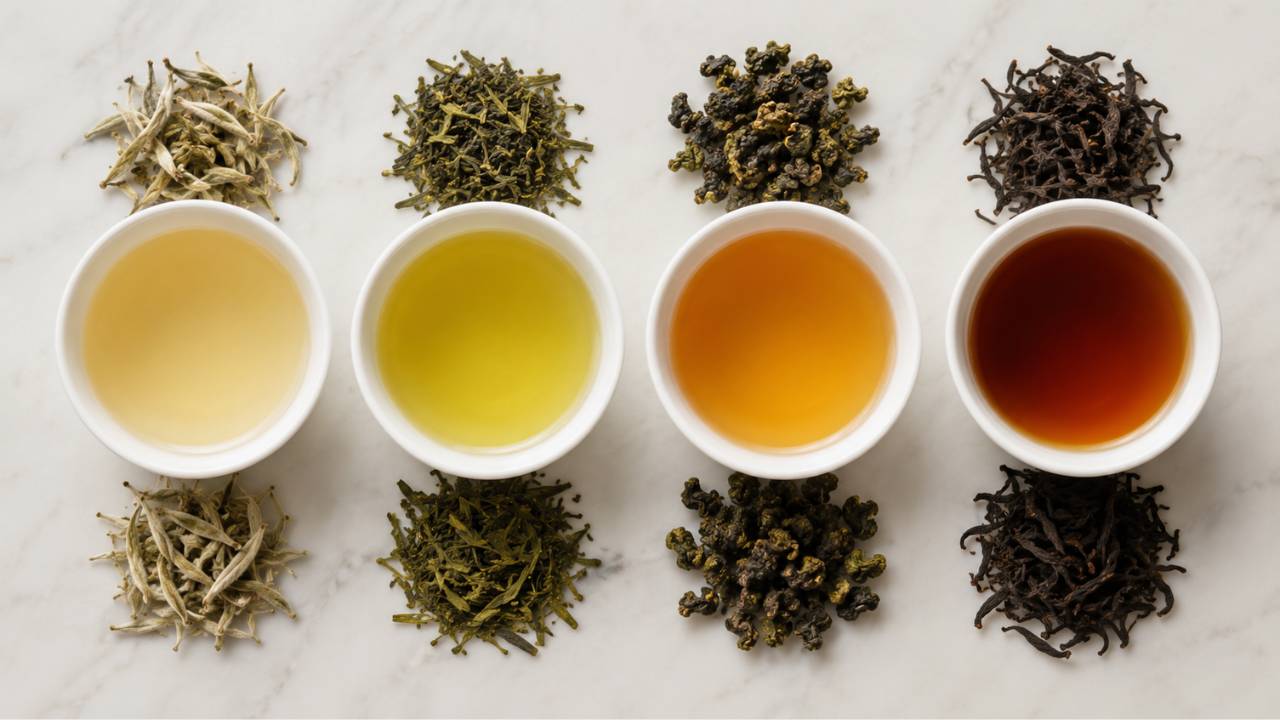
Many people assume that white tea, green tea, oolong tea, and black tea come from different plants.
In reality, all traditional teas originate from the same species: Camellia sinensis. While different cultivars and varieties exist—including Camellia sinensis var. sinensis and Camellia sinensis var. assamica—the major tea categories are primarily defined by how the leaves are processed after harvest.
While cultivar, terroir, elevation, climate, and harvesting standards all influence flavor, the primary factor that determines whether a tea becomes white, green, oolong, or black tea is the processing method used after harvest.
By controlling processes such as withering, oxidation, fixation, rolling, drying, and roasting, tea producers can create remarkably different teas from the same leaf.
Understanding these processing methods is the key to understanding tea itself.
White Tea
White tea is generally considered the least processed of the major tea categories.
Its production focuses on preserving the natural character of freshly harvested leaves through gentle handling and minimal intervention.
Typical Processing Flow
Harvesting → Withering → Drying → Sorting → Packing
Harvesting
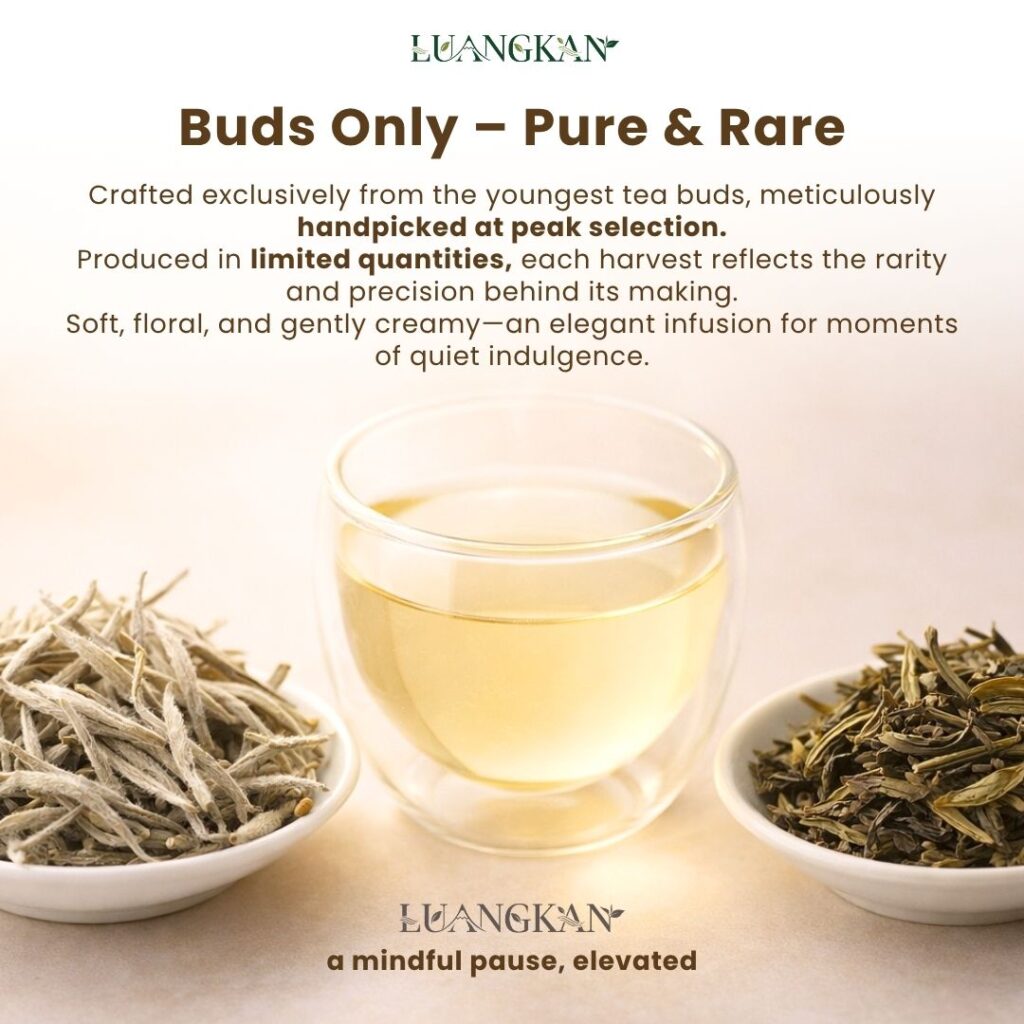
White tea is typically produced from the youngest and most tender parts of the tea plant, including unopened buds and young leaves.
The plucking standard depends on the style being produced.
For example:
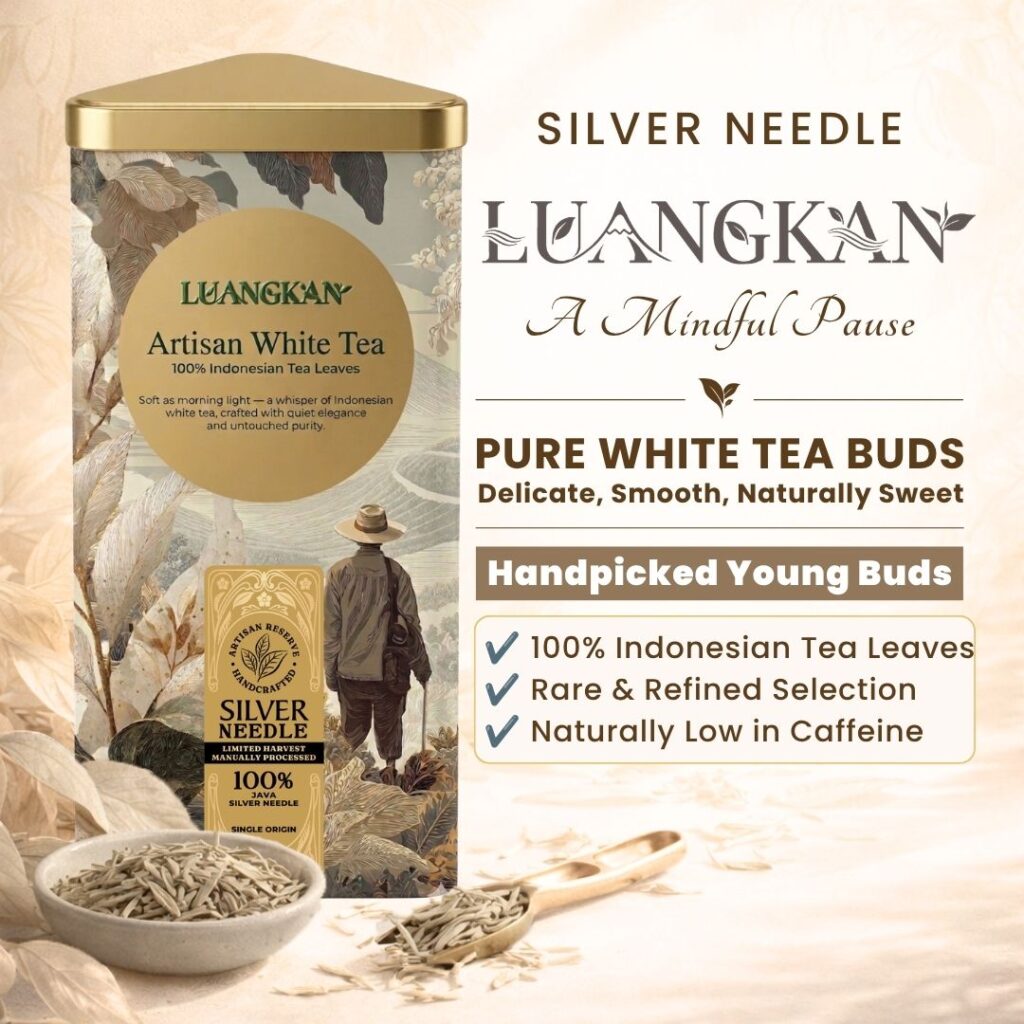
- Silver Needle is typically made from unopened buds.
- White Peony is usually made from buds and young leaves.
Because these tender buds and leaves require careful selection, premium white teas are typically handpicked. Manual harvesting allows producers to select only the desired shoots while minimizing damage to the leaf.
Withering
Withering is the most important stage in white tea production.
Fresh leaves are spread out and allowed to lose moisture gradually. This process softens the leaves and initiates important aromatic and chemical changes within the leaf.
Traditionally, withering is carried out under sunlight and natural airflow.
Today, many premium tea estates also use controlled indoor withering rooms where temperature, humidity, and airflow can be carefully managed. This helps maintain consistency when weather conditions are less predictable and allows producers to achieve more stable quality throughout the year.
Natural Oxidation
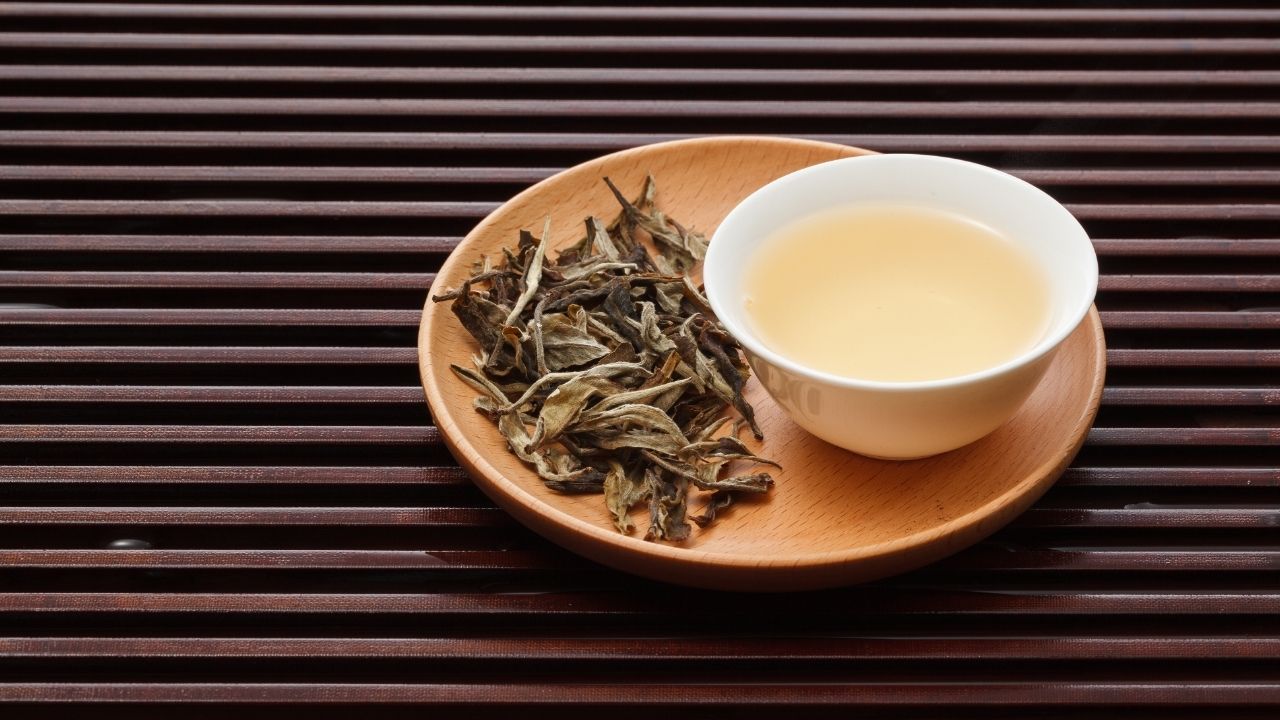
White tea is often described as minimally processed, but it is not completely unoxidized.
A small amount of natural oxidation occurs during withering and drying. Unlike oolong and black tea, this oxidation is not actively encouraged, accelerated, or tightly controlled.
Drying
Once the desired level of withering has been achieved, the leaves are dried to a stable moisture level suitable for storage and transportation.
The result is a tea known for its delicate aroma, subtle sweetness, and elegant character.
Green Tea
Green tea is produced by preventing significant oxidation shortly after harvest.
The defining feature of green tea production is fixation, a heat-treatment process that deactivates the enzymes responsible for oxidation.
Typical Processing Flow
Harvesting → Withering (Optional) → Fixation → Rolling/Shaping → Drying → Sorting → Packing
Withering
Some green teas undergo a short withering period before fixation, while others proceed directly to heat treatment.
The use and duration of withering vary depending on the tea style and production philosophy.
Fixation
Fixation, sometimes called “kill-green,” is the stage that distinguishes green tea from other major tea categories.
By applying heat shortly after harvest, producers stop enzymatic oxidation before it can significantly alter the leaf.
Chinese Green Tea
Chinese green teas are typically produced using pan-firing.
Examples include:
- Chun Mee
- Gunpowder
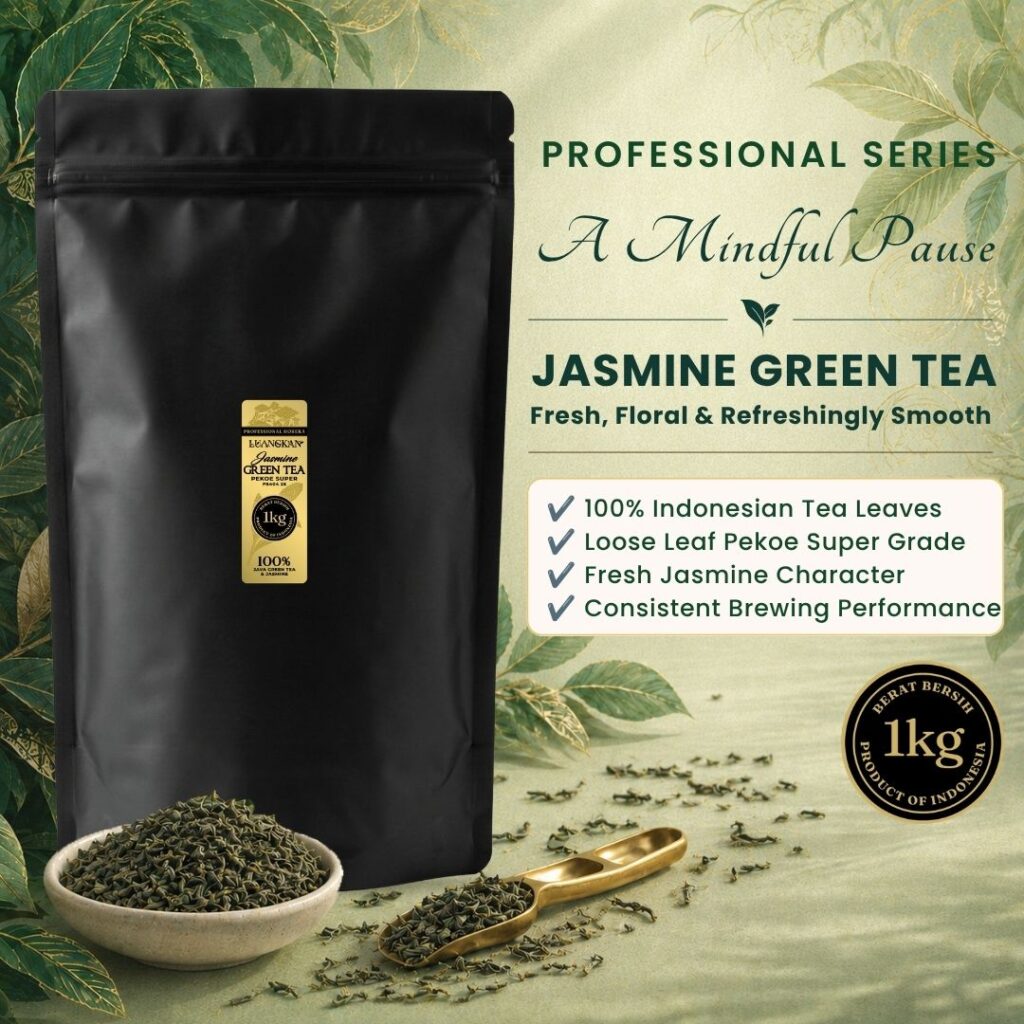
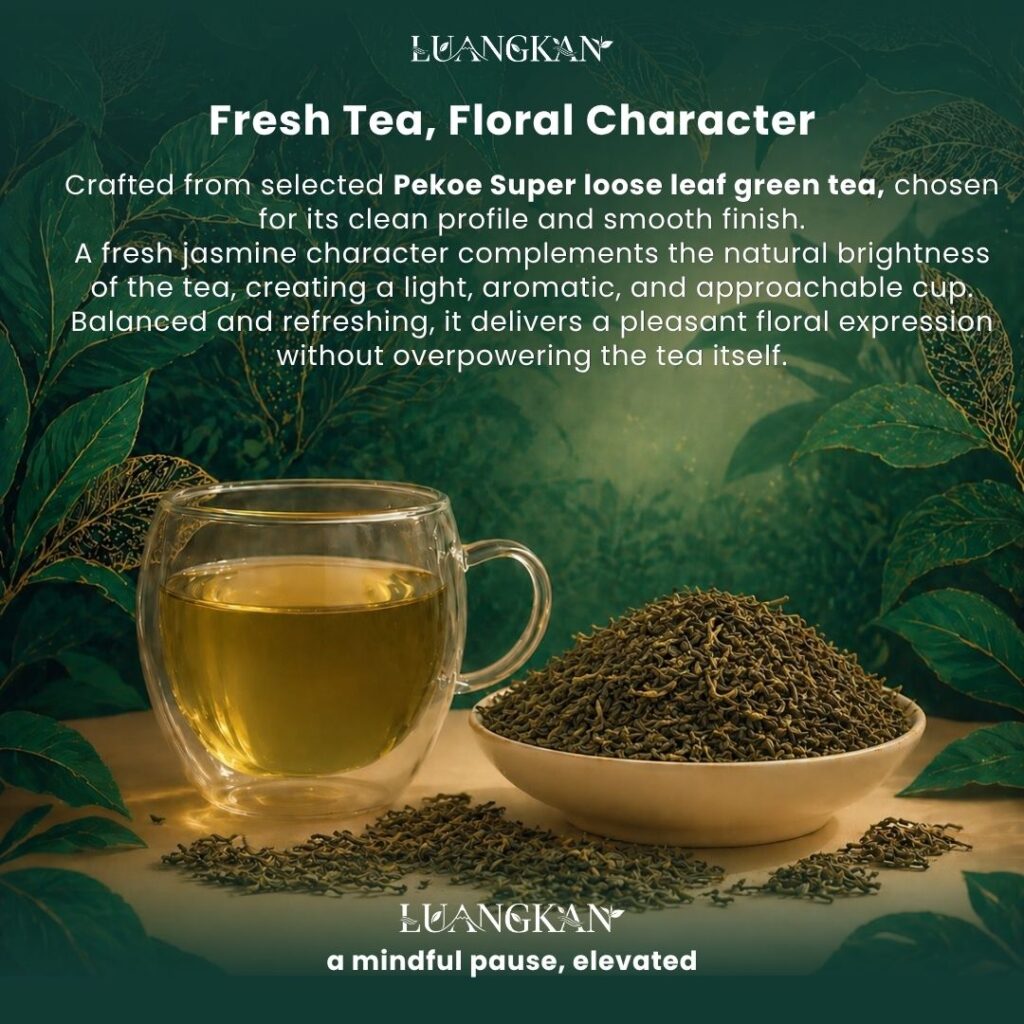
- Pekoe Super
Pan-firing often contributes notes that may be described as:
- Nutty
- Toasted
- Chestnut-like
Japanese Green Tea
Japanese green teas are typically produced using steaming rather than pan-firing.
Common examples include Sencha and Gyokuro. Other popular Japanese tea styles include Matcha, Genmaicha, and Hojicha, each produced using additional techniques that create distinct flavor profiles.
Steaming helps preserve bright green color and often contributes to the fresh vegetal and umami-rich character associated with Japanese teas.
Rolling and Shaping
After fixation, the leaves may be rolled or shaped according to the style being produced.
For example, Gunpowder tea is rolled into small pellets, while Chun Mee is shaped into distinctive curved leaves.
Drying
The leaves are then dried to a stable moisture level suitable for storage and distribution.
Oolong Tea
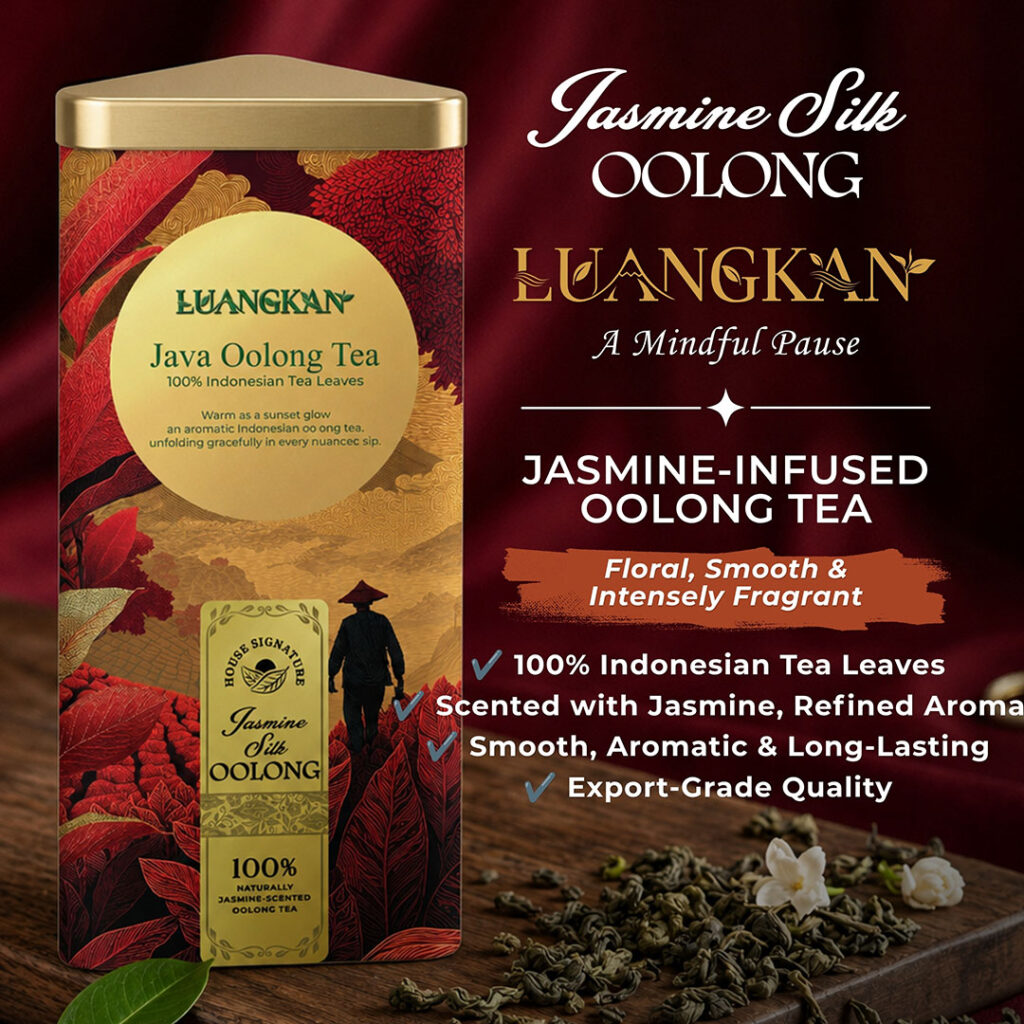
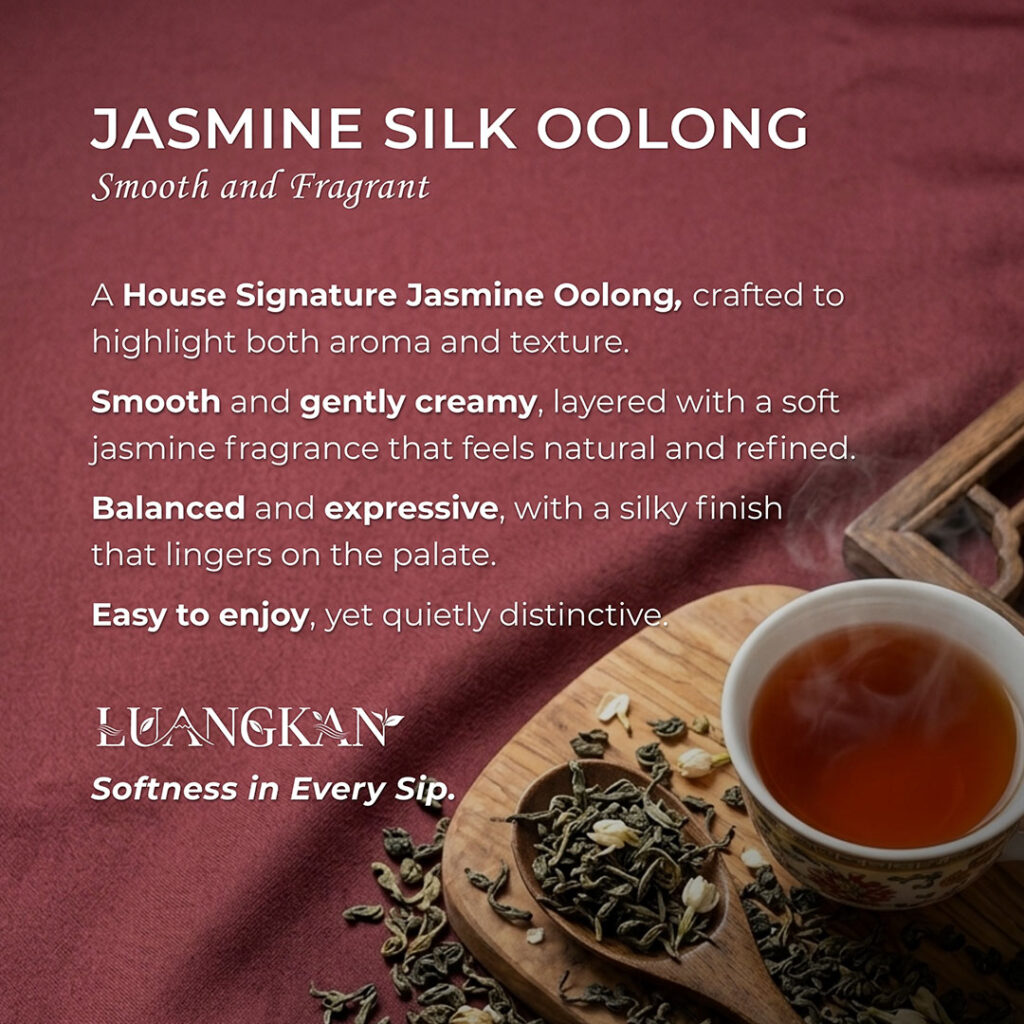
Oolong tea occupies the broad spectrum between green tea and black tea.
Among the major tea categories, it is often considered the most diverse and technically demanding because producers actively manage oxidation throughout production.
Typical Processing Flow
Harvesting → Withering → Bruising/Tossing → Partial Oxidation → Fixation → Rolling → Drying → Roasting (Optional)
Withering
Production begins with withering to reduce moisture and prepare the leaves for further processing.
Bruising and Tossing
The leaves are gently shaken, tossed, or handled to bruise the edges of the leaf.
This controlled damage encourages oxidation to begin in a measured and deliberate manner.
Partial Oxidation
Unlike green tea, where oxidation is prevented, or black tea, where oxidation is allowed to proceed extensively, oolong tea undergoes carefully controlled partial oxidation.
This allows producers to create an extraordinarily wide range of styles.
Lighter Oolong Styles
Lighter styles often display:
- Floral aromas
- Fresh character
- Delicate sweetness
Green Oolong is a common example.
Richer Oolong Styles
Richer styles often display:
- Riper fruit notes
- Greater body
- Richer sweetness
Red Oolong is one example.
Roasting
Some oolong teas undergo roasting after drying.
Roasting can add depth, warmth, sweetness, and additional complexity to the finished tea.
Black Tea
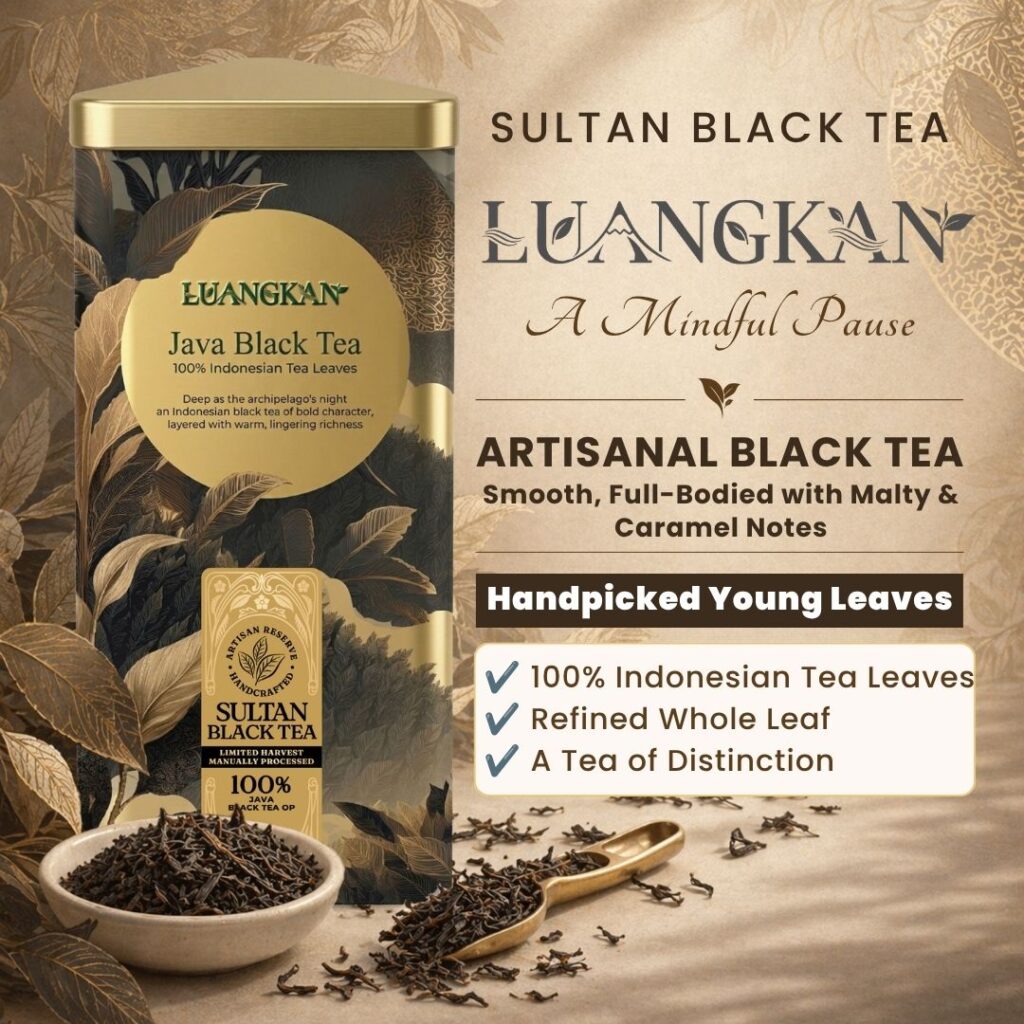
Black tea undergoes the most extensive oxidation among the four major tea categories discussed in this article.
This process transforms both the appearance and flavor of the leaf.
Typical Processing Flow
Harvesting → Withering → Rolling → Oxidation → Drying → Sorting → Packing
Withering
Fresh leaves are first withered to reduce moisture and improve flexibility.
Rolling
The leaves are then rolled to break cell walls and expose internal compounds to oxygen.
This stage prepares the leaf for oxidation.
Oxidation
Oxidation is the defining stage of black tea production.
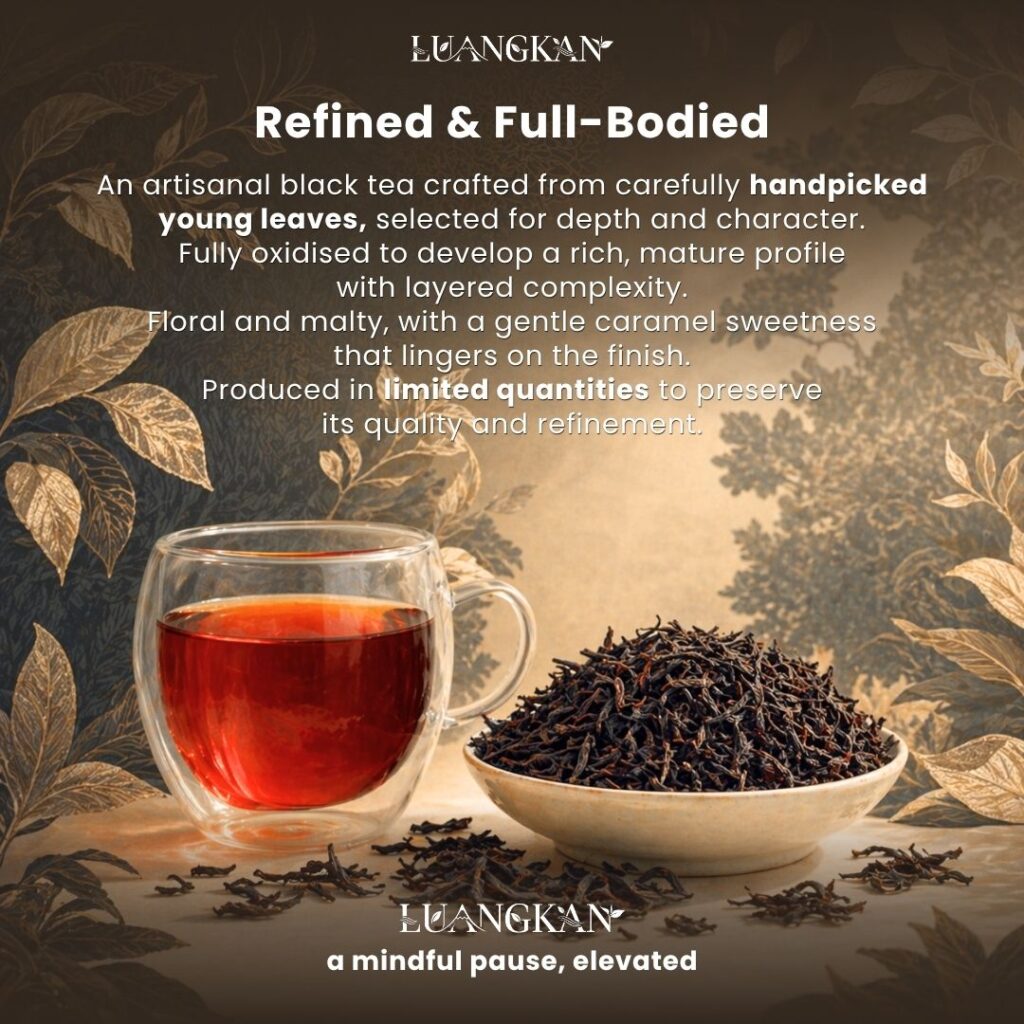
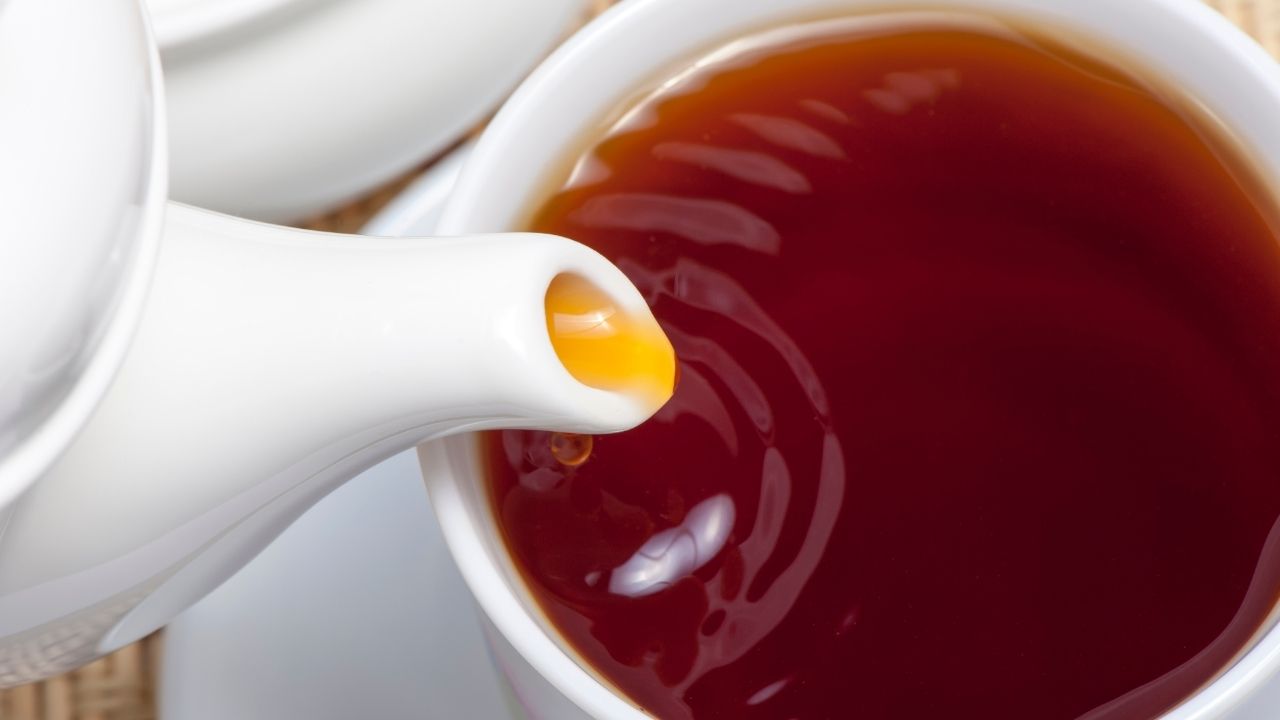
Black tea undergoes the most extensive oxidation among the four major tea categories. This extensive oxidation is responsible for its darker liquor, fuller body, and richer flavor profile.
During oxidation, naturally occurring catechins are transformed into compounds such as theaflavins and thearubigins.
These chemical changes contribute to:
- Darker liquor color
- Fuller body
- Richer flavor
- Greater depth and complexity
Drying
Once the desired character has developed, heat is applied to halt oxidation and stabilize the tea.
Depending on the intended use, black tea may be sorted into various leaf grades ranging from whole-leaf teas to smaller grades commonly used for blending and tea bags.
Final Thoughts
White tea, green tea, oolong tea, and black tea all begin with the same plant: Camellia sinensis.
What separates them is the way the leaves are processed after harvest.
From the gentle handling of white tea to the extensive oxidation of black tea, each category reflects a different approach to transforming the tea leaf.
Understanding these differences provides a strong foundation for exploring the wider world of tea and appreciating the craftsmanship behind every cup.