
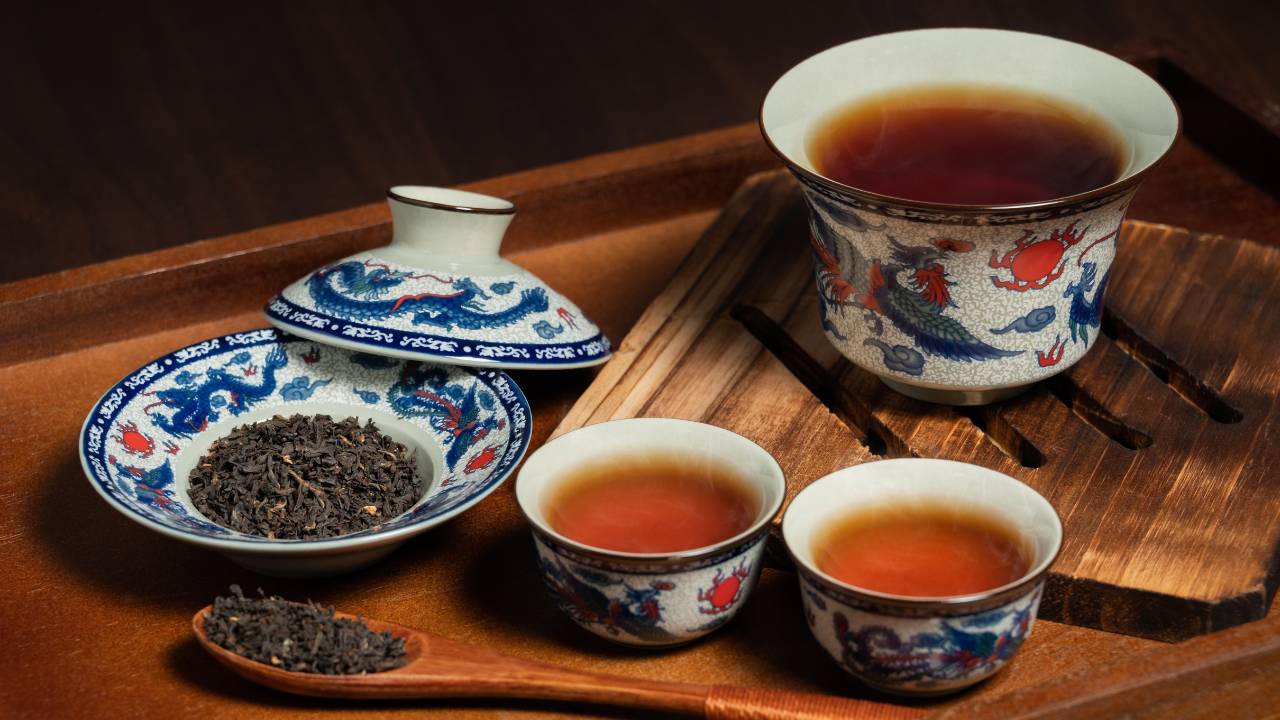
Chinese green tea is one of the most widely traded tea categories in the world. However, many buyers are unfamiliar with the terminology commonly used throughout the tea industry.
Names such as Handpicked, Pekoe Super (PS), Pekoe (P), Gunpowder, Chun Mee, Sow Mee, Broken Tea, and Dust frequently appear in tea catalogs, export specifications, and commercial tea programs.
These terms help describe different levels of leaf selection, processing styles, and particle sizes. Understanding their differences can help tea buyers, importers, horeca businesses, and tea enthusiasts choose the most suitable tea for their needs.
This article focuses on Chinese-style green teas commonly found in international trade. Japanese green teas such as Sencha, Gyokuro, Matcha, Genmaicha, and Hojicha are discussed separately in our Japanese Tea Guide.
Handpicked Green Tea
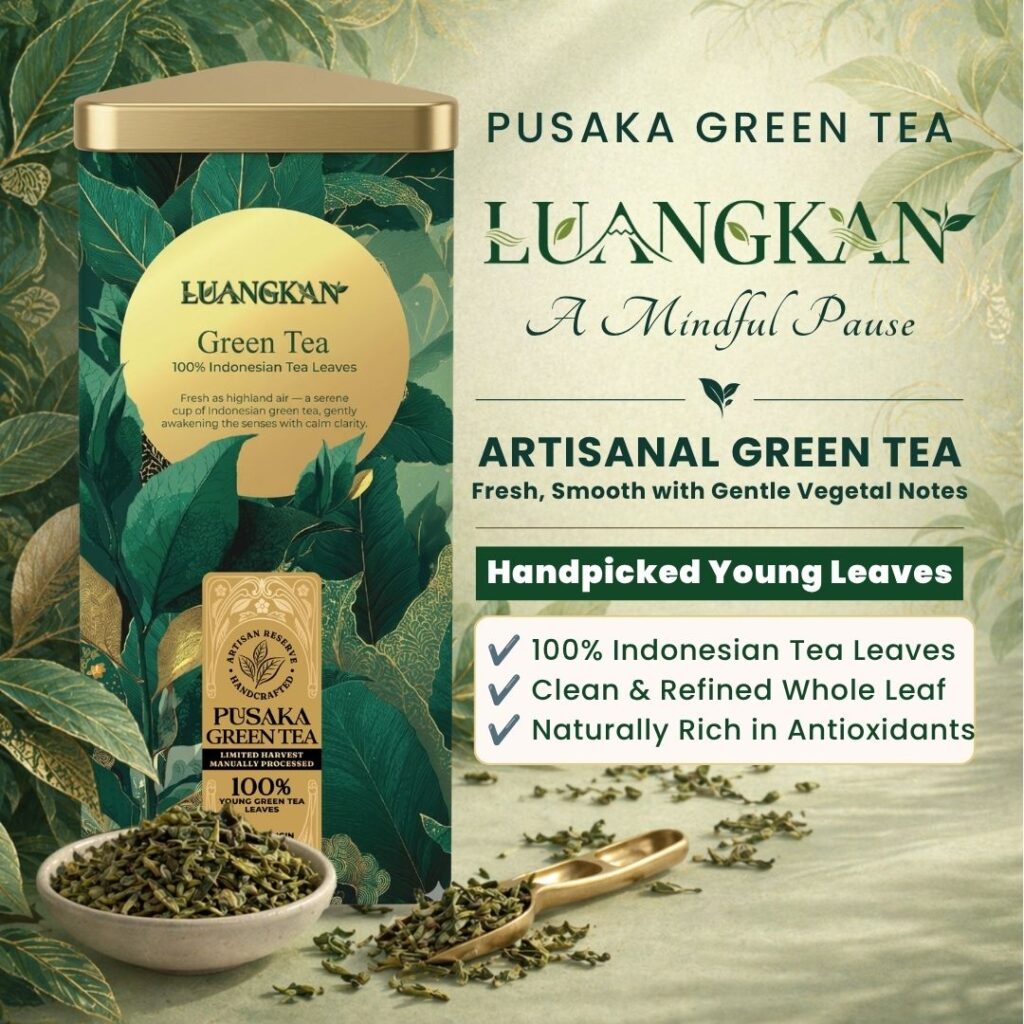
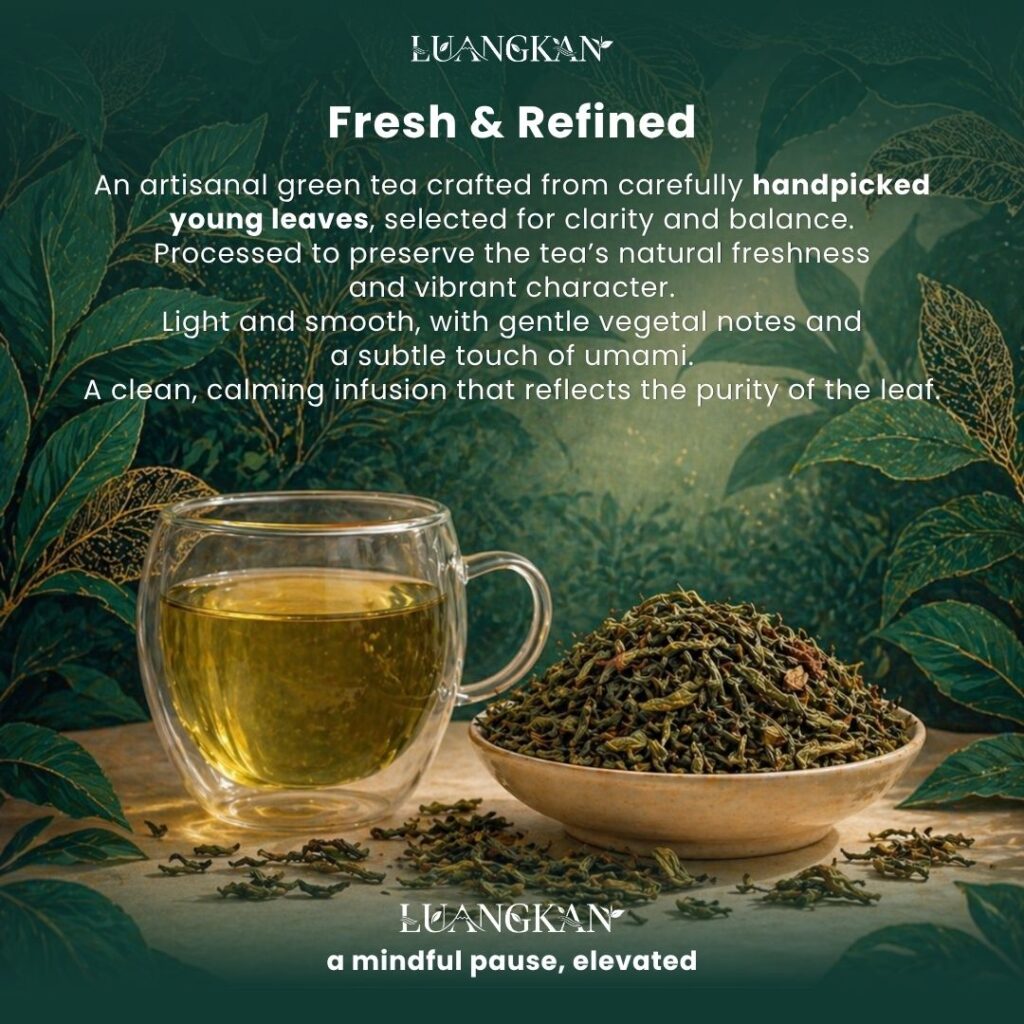
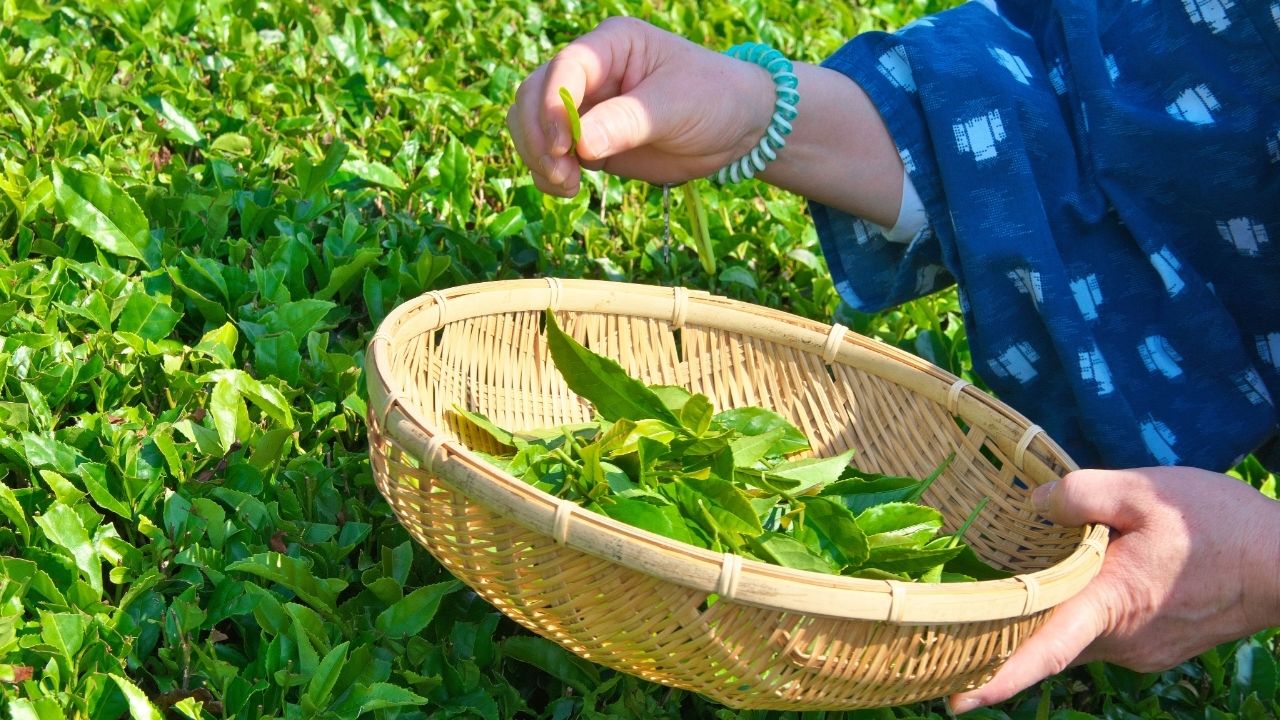
Handpicked green tea represents the most premium segment of Chinese green tea production.
Unlike mechanically harvested tea, handpicked tea is carefully selected by skilled tea pluckers who harvest only the youngest and most desirable shoots.
Premium handpicked teas are often harvested using standards such as:
- One bud and one leaf
- One bud and two young leaves
Because the leaves are harvested and handled more carefully, they generally maintain better appearance, less physical damage, and greater flavor complexity.
Handpicked green teas are often valued for:
- Superior leaf appearance
- Greater complexity
- Cleaner flavor
- Smoother finish
- Premium craftsmanship
Many specialty loose-leaf teas fall into this category.
Pekoe Super (PS)
Pekoe Super, commonly abbreviated as PS, is one of the most widely recognized premium commercial specifications in the green tea trade.
Compared with standard Pekoe grades, PS teas are generally more carefully selected and sorted for consistency.
PS teas typically offer:
- Better leaf uniformity
- Cleaner appearance
- More consistent brewing performance
- Fewer stems and coarse leaves
Because of their reliability and consistency, PS grades are commonly used in premium horeca, foodservice, and export programs.
Pekoe (P)
Pekoe is another common whole-leaf green tea specification.
The leaves are generally slightly larger and less selectively sorted than Pekoe Super while still maintaining good overall quality.
Pekoe teas are often appreciated for:
- Reliable quality
- Balanced flavor
- Good value
- Broad commercial versatility
For many buyers, Pekoe provides an excellent balance between quality and affordability.
Gunpowder Tea
Gunpowder is one of the most recognizable Chinese green tea styles.
The leaves are tightly rolled into small pellets resembling grains of gunpowder, which is how the tea earned its name.
This compact shape helps protect the leaf and retain aroma during storage and transportation.
Gunpowder tea is often known for:
- Fuller body
- More robust flavor
- Excellent shelf stability
- Strong brewing performance
When brewed, the pellets gradually unfurl back into full leaves.
Chun Mee Tea
Chun Mee, often translated as “Precious Eyebrow,” is named after the distinctive curved shape of its leaves.
It is one of the most widely produced and exported Chinese green tea styles.
Compared with Gunpowder, Chun Mee generally offers:
- Lighter body
- Brighter character
- Mild fruity notes
- Gentle toasted nuances
- Refreshing finish
Its approachable flavor profile has made it popular in many international markets.
Broken Tea (BT)
Broken Tea consists of leaf pieces that are smaller than whole-leaf grades but larger than fannings or dust.
Broken tea is commonly used in commercial brewing because it extracts more quickly than whole leaves.
Advantages of broken tea include:
- Faster infusion
- Stronger liquor
- Consistent brewing performance
- Efficient use in horeca operations
Broken tea is not necessarily lower quality than whole-leaf tea. It is simply designed for different brewing objectives.
Sow Mee
Sow Mee is commonly traded as a lower-grade Chinese green tea style and is often associated with fannings-grade material.
It consists of smaller leaf fragments and may contain fine tea stems.
Compared with whole-leaf grades, Sow Mee generally produces:
- Faster extraction
- Stronger liquor
- More pronounced astringency
- Cost-effective brewing performance
Because of these characteristics, Sow Mee is frequently used in blending and commercial tea production.
Dust
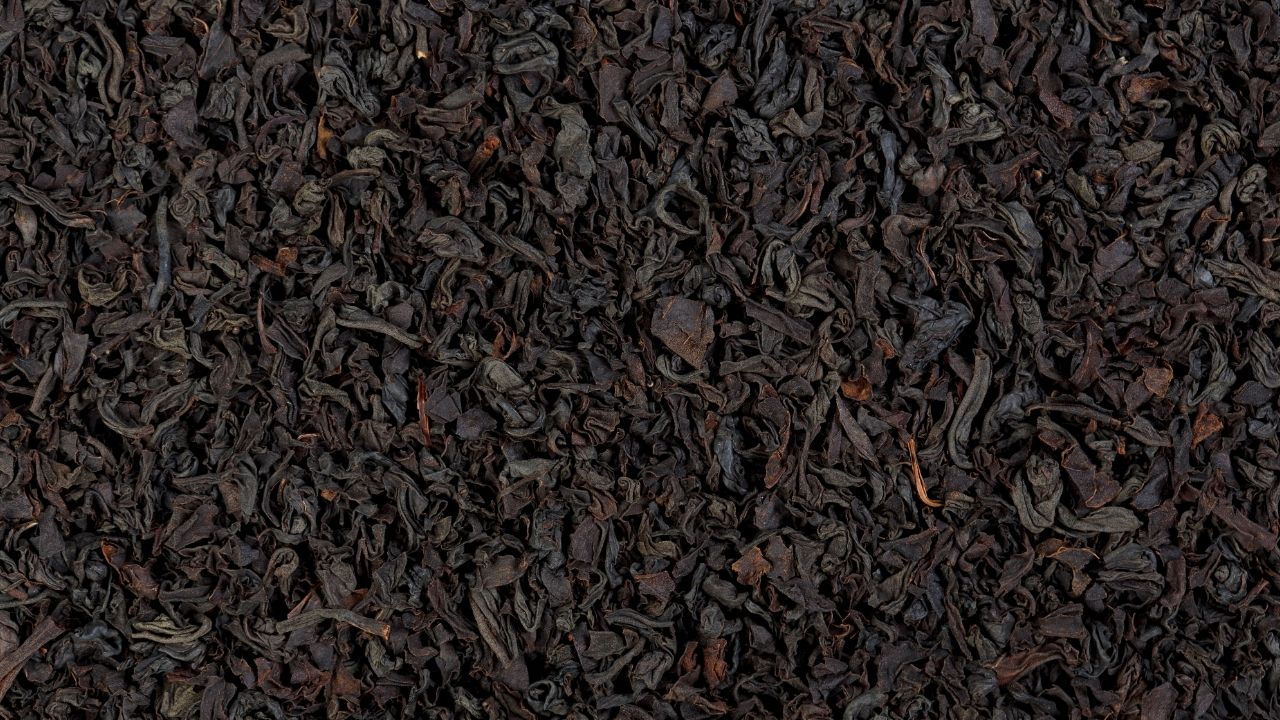
Dust is the finest particle size commonly found in commercial tea grading.
Despite its name, Dust is not waste material. It is a legitimate tea grade valued for its speed, efficiency, and strong extraction.
Dust is commonly used for:
- Tea bags
- High-volume foodservice
- Instant brewing applications
- Industrial tea production
Because of its large surface area, Dust releases flavor, caffeine, and polyphenols very quickly during brewing.
Why Leaf Size Matters
Leaf size has a direct impact on how quickly tea extracts during brewing.
Generally, larger whole leaves release flavor compounds more gradually, while smaller particles extract more rapidly because they expose more surface area to water.
As a result:
- Whole-leaf teas often produce a cleaner and more layered cup.
- Broken teas brew faster and develop stronger body.
- Sow Mee and Dust extract the quickest and are widely used in tea bags and commercial applications.
Smaller particle size does not automatically mean lower quality. Each grade is designed for different brewing goals and commercial requirements.
Which Green Tea Is Best?
The answer depends on the intended application.
| Type | Common Use |
|---|---|
| Handpicked Green Tea | Premium loose-leaf tea |
| Pekoe Super (PS) | Premium horeca and export programs |
| Pekoe (P) | Everyday premium tea |
| Gunpowder | Stronger body and longer storage stability |
| Chun Mee | Balanced daily drinking tea |
| Broken Tea | Horeca and commercial brewing |
| Sow Mee | Blending and cost-efficient production |
| Dust | Tea bags and industrial applications |
Each category serves a different purpose, and the best choice depends on your desired flavor profile, brewing method, and business requirements.
Recommended Brewing Guidelines
For most Chinese green teas, the following parameters provide a reliable starting point:
- Water Temperature: 70–80°C
- Tea Ratio: 2g tea per 100ml water
- Steeping Time: 2–3 minutes
Whole-leaf teas are generally more forgiving during brewing, while smaller grades such as Broken Tea, Sow Mee, and Dust extract more rapidly and may require shorter steeping times.
Final Thoughts
Chinese green tea is far more diverse than many people realize.
Terms such as Handpicked, Pekoe Super, Pekoe, Gunpowder, Chun Mee, Broken Tea, Sow Mee, and Dust each describe different positions within the green tea trade.
Some refer to leaf selection, others to processing style, and others to particle size.
Understanding these distinctions helps buyers make more informed decisions and select the right tea for specialty tea service, horeca operations, blending programs, or large-scale commercial production.