
In the global tea trade, buyers rarely lose customers because a tea was slightly more expensive.
They lose customers when the tea no longer tastes the same.
A consumer who purchases the same tea every week expects the same aroma, color, body, and flavor every time. If a familiar tea suddenly becomes more bitter, lighter in color, weaker in body, or noticeably different in aroma, trust begins to erode.
For this reason, experienced importers often place a higher value on consistency than on price. While market prices fluctuate constantly, consistency protects brands, simplifies operations, and supports long-term business growth.
In tea supply, consistency is not a luxury. It is a commercial necessity.
Flavor Drift Is One of the Biggest Risks in Tea Supply
One of the least understood challenges in tea sourcing is flavor drift.
Tea is a natural agricultural product, not a manufactured ingredient. Every harvest is influenced by weather conditions, rainfall, temperature, sunlight exposure, and seasonal growth cycles.
As a result, tea harvested at different times of the year can naturally exhibit variations in:
- Aroma intensity
- Liquor color
- Body and mouthfeel
- Briskness
- Bitterness
- Astringency
Without proper quality management, these seasonal differences can gradually alter the final product sold to consumers.
For tea brands, flavor drift creates a serious problem. A product that performed well six months ago may no longer match consumer expectations today.
Consistency Protects Brand Reputation
Every successful tea brand is built on repeat purchases.
Consumers return because they trust the experience they received previously. They expect the tea they buy tomorrow to taste the same as the tea they enjoyed last month.
When flavor consistency breaks down, the consequences often include:
- Customer complaints
- Negative reviews
- Reduced repeat purchases
- Retailer concerns
- Loss of brand trust
For private-label brands, inconsistency may also trigger product reformulation, packaging updates, inventory adjustments, and customer communication efforts that create additional costs beyond the tea itself.
Importers understand that rebuilding customer confidence is significantly more expensive than maintaining consistency in the first place.
This is why many professional buyers prefer stable long-term suppliers over short-term spot-market opportunities.
Seasonal Blending Expertise Creates Stability
Since seasonal variation is unavoidable, the question is not whether tea changes.
The question is how suppliers manage those changes.
One of the most important capabilities in professional tea supply is seasonal blending.
Experienced tea tasters continuously evaluate production lots from different harvest periods and growing regions. These lots are then carefully balanced to maintain a consistent profile throughout the year.
A dry-season harvest may contribute stronger aroma and briskness, while a wetter-season harvest may contribute smoothness and balance. By combining different lots strategically, suppliers can maintain a stable flavor profile despite natural agricultural variation.
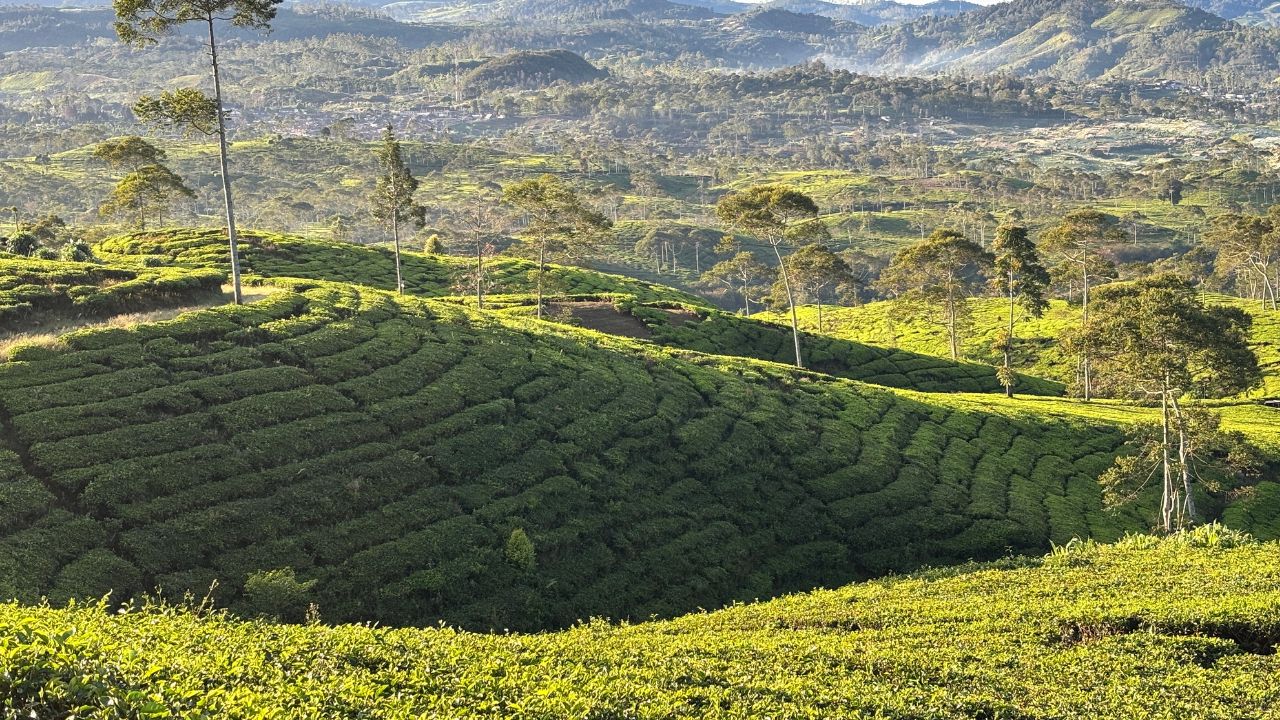
At LUANGKAN, tea lots from multiple harvest periods and growing regions across West Java are regularly evaluated to help maintain consistent flavor performance for long-term customers.
For importers, this creates confidence that future shipments will remain aligned with previously approved specifications.
Consistency Is Also a Mechanical Requirement
Tea consistency is not only about flavor.
For many commercial tea brands, consistency directly affects manufacturing efficiency.
Modern tea packaging facilities operate highly automated production lines that depend on predictable material characteristics. These systems are designed around specific particle sizes, bulk densities, and flow behaviors.
If these characteristics change significantly between shipments, packaging operations may experience:
- Incorrect fill weights
- Machine stoppages
- Reduced production efficiency
- Increased product waste
- Higher operating costs
Even when the flavor remains acceptable, mechanical inconsistency can create expensive operational problems.
This is why many large tea buyers evaluate grading consistency as carefully as they evaluate cup quality.
Supply Consistency Supports Business Growth
Consistency extends beyond flavor and manufacturing.
Importers also need confidence that supply will remain available as their business grows.
Many suppliers can provide an excellent sample and fulfill a first order. Far fewer can maintain the same quality standards while supporting larger volumes over multiple years.
For growing tea brands, supply interruptions can result in:
- Retail stock shortages
- Delayed product launches
- Lost sales opportunities
- Distribution challenges
- Reduced customer confidence
This is why procurement teams often evaluate long-term production capability alongside tea quality itself.
A reliable supply partner should be capable of supporting both current demand and future growth.
Why Long-Term Supplier Relationships Matter
The strongest tea brands are rarely built through short-term purchasing decisions.
Long-term supplier relationships create a deeper understanding of product specifications, quality expectations, seasonal variations, and future demand forecasts.
Over time, both supplier and buyer benefit from:
- Better production planning
- Greater quality consistency
- Improved forecasting
- Reduced sourcing risk
- Stronger supply security
The result is a more stable and predictable business for both parties.
Conclusion
In tea sourcing, consistency is far more than a quality metric.
It protects brand reputation, supports manufacturing efficiency, reduces operational risk, and enables long-term growth.
Any supplier can deliver a good sample. The best suppliers deliver the same result for years.
For professional importers, that level of consistency is often worth far more than the lowest available price.